


Supporting Airbus A3’s Vahana Autonomous eVTOL
Motivo delivered propulsion, power, and test systems for Airbus’ full-scale autonomous eVTOL, which flew 487 nautical miles across 138 test flights.
Background
In 2016, Airbus' Silicon Valley innovation center, Acubed (A³), launched Project Vahana: an ambitious effort to design, build, and fly a fully autonomous electric Vertical Takeoff and Landing (eVTOL) aircraft.
The goal was to fly a full-size, self-piloted demonstrator and gather the data needed to evaluate the technical and economic viability of urban air mobility.
A³ ran a deliberately small, experienced team. To move faster than traditional aerospace development cycles, they brought in Motivo as an extension of that team. Motivo took ownership of key flight subsystems and supported the program from early architecture studies through iron bird testing and the full flight campaign.
Challenge
Most aerospace programs take a decade. A³ wanted flight-tested results in under four years.
That timeline left no room for traditional supplier cycles. Flight hardware had to be safe, lightweight, and reliable under intense scrutiny, yet designed and built in weeks, not months.
The aircraft itself added complexity:
-
A completely novel high-voltage DC propulsion system and a new avionics architecture
-
Actuation systems with far lower maintenance needs than conventional electro-hydraulics, because low service costs were key to the business case
-
Tight mass, strength, and precision targets on every flight-critical part

Variable Pitch Fan Hub Assembly

Variable Pitch Fan With Composite Propeller
The Story
Architectural Innovation, Rapid Prototyping, and Rigorous Flight Validation
Motivo’s engineering contributions covered a wide range of aircraft systems, each with its own development cycle:
Architecture Studies
Early concept work prioritized low maintenance costs over traditional aerospace complexity, steering the team away from electro-hydraulics in favor of innovative electromechanical systems.
Rapid Prototyping
Teams designed, built, and refined hardware on tight iterative design and build cycles to support subsystem development and aircraft integration.
Subsystem Validation
Designs were validated through rigorous testing, including standalone subsystem checks and full-vehicle integration.
Iron Bird Testing
All aircraft systems were integrated and tested on a full scale iron-bird bench test. This testing was critical on an electric aircraft with a completely novel, high voltage DC propulsion system, a new avionics architecture and numerous beta-level custom components.
Flight Campaign
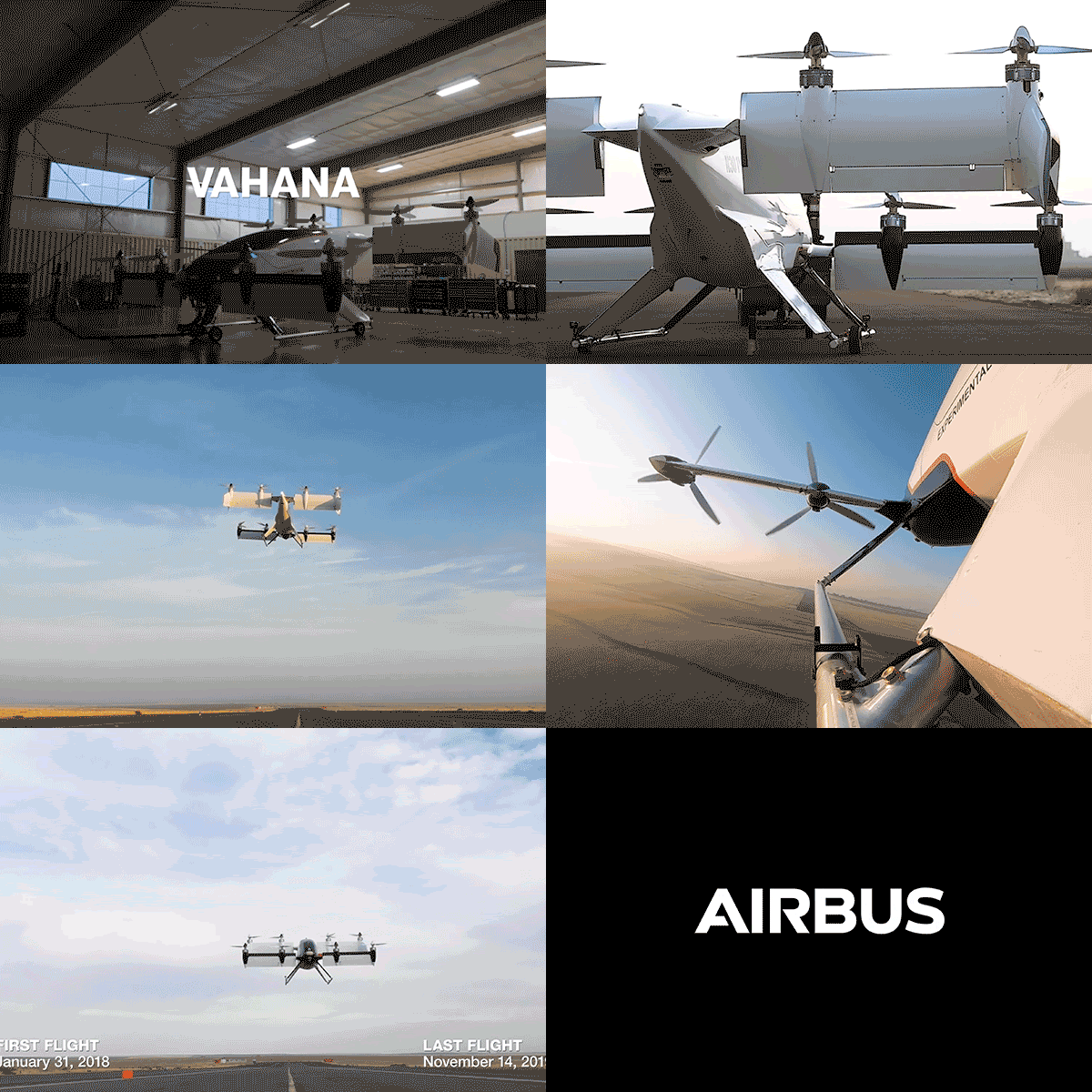
A 138-flight test program validated the platform, with nearly 500 miles flown and 13 hours of autonomous air time.

Variable Pitch Fan Subassemblies Ready for Delivery

Variable Pitch Fan on Aircraft

Variable Pitch Fan Actuator Assembly
The Solution
Technologies and Systems
Motivo was responsible for designing, manufacturing, and assembling three complete sets of variable pitch fans, the heart of Vahana’s propulsion system. Adjusting blade pitch in flight is what let the aircraft take off vertically like a helicopter and then transition to efficient forward flight like an airplane.
In keeping with the program’s low-maintenance goals, pitch control used electromechanical actuation in place of traditional electro-hydraulics. Each fan set had to meet tight tolerances for strength, mass, and responsiveness, while being designed, built, and delivered in weeks.
Motivo also designed and built hardware for:
-
High-voltage power distribution: routing power from the batteries to the aircraft’s novel DC propulsion system
-
Battery swapping system: enabling fast turnarounds to keep the aircraft in the air
-
Actuated canopy system: including the kinematics behind the canopy’s movement
As the program progressed, Motivo’s role expanded to include ground support equipment for the Airbus flight test team.
Flight Validation
The Outcome
Mission Accomplished
138
Autonomous Test Flights
487
Nautical Miles Flown
13
Hours of Flight Time
By November 2019, Vahana had achieved every major program goal, completing its flight test program in under four years from launch. That’s a fraction of the decade typical for a new aircraft. Across two years of flight testing, Motivo’s subsystems performed throughout, from the variable pitch fans that carried the aircraft through every transition to the high-voltage systems that powered it.
The program proved that a full-scale, self-piloted electric aircraft could take off vertically, fly forward, and land without a runway. Just as important, it gave Airbus the real-world performance and economic data it needed to evaluate urban air mobility as a business, and that data shaped its next steps in the field. Vahana is now retired and on display at the Hiller Aviation Museum in San Carlos, CA.
Its influence reached well beyond one aircraft. Vahana showed that aerospace hardware could be designed, built, and flight-tested at a pace the industry hadn’t seen before. Many of the engineers and leaders behind the program went on to build today’s eVTOL companies, and Motivo continues to help that next generation move from demonstrator to production.


Services Delivered
Systems Engineering: Complete System Architectures; Product Development Roadmaps; System Level and Component Trade Studies.
Mechanical Design & Engineering: System Level Design; Kinematics Design for Mechanisms; Computer Aided Design (CAD) and Analysis
Electrical Design & Engineering: Power Electronics Development; Low / High Voltage Power Distribution Design
Prototyping, Fabrication & Assembly: Mechanical Assembly; Metal Fabrication; Rapid Prototyping
Testing & Validation: Subsystem Validation; Full-Vehicle Integration Testing