

Drive-by-Wire Retrofit Architecture for Heavy Duty Vehicles
Motivo developed a robust, multi-modal Drive-by-Wire (DbW) system to transform heavy-duty legacy vehicle platforms into autonomous-ready assets.
Background
While autonomous vehicle technology has advanced rapidly, many mission-critical heavy-duty platforms ranging from Class 8 semi-trucks to massive 300-ton haul trucks still rely on traditional mechanical, pneumatic, and hydraulic controls. Transforming these legacy platforms into "autonomous-ready" systems requires more than just adding software; it requires a sophisticated hardware and control layer that can translate digital commands into high-force physical actions with industrial-grade reliability.
Motivo was engaged to engineer a comprehensive Drive-by-Wire retrofit solution. The goal was to replace legacy mechanical linkages with high-integrity electronic controls for throttle, braking, steering, and shifting. The architecture needed to support diverse Operational Design Domains (ODD), enabling everything from local line-of-sight wireless maneuvering for logistics to high-speed tele-operation over the internet.
Intelligent System Communication & Control
Without direct OEM support for digital control, Motivo engineered a sophisticated control layer governed by a robust software state machine. This multi-modal interface manages transitions between manual, remote, and autonomous modes with millisecond precision.

Technical Layout for Manual Interface and Safety-Critical Control Alignment
Over-Internet Tele-Operation
Motivo integrated high-fidelity remote systems to support operation at speeds up to 25 mph. To ensure safety, the system includes event-triggered CAN message monitoring to detect network latency and automatically trigger safety stops if signal integrity is compromised.
Local Wireless Control
For low-speed maneuvers (under 5 mph) in tight environments like trade show loading docks, Motivo implemented a local line-of-sight remote solution using safety-rated hardware.
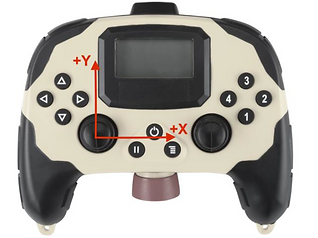
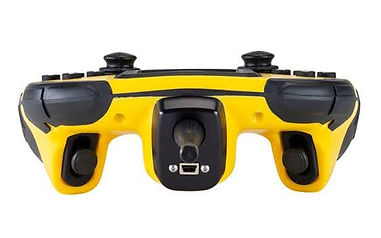
Remote Controller
Signal Emulation
To maintain the health of the vehicle's stock controllers, custom circuitry was developed to replicate dual ratiometric throttle signals. This allowed the digital system to bypass mechanical pedals while satisfying all existing onboard diagnostics.


Add-On Pedal Actuator
High-Integrity Mechanical Retrofits
Converting heavy-duty systems for by-wire control required bespoke mechanical and electrical packaging designed to withstand extreme forces.
Advanced Brake-by-Wire
Motivo replaced traditional mechanical treadle valves with electronically controlled proportional valves. To eliminate single points of failure, an independent backup chain was added using binary solenoid valves on the spring brakes, ensuring the vehicle defaults to a full stop if system power is lost.

Engine Bay

Side Skirts

Under the Cab
Precision Steer-by-Wire
Steering was modernized through a unique concentric direct-mount actuator interface on the stock TRW gearbox. This minimized backlash and allowed for software-governed slew rate limits, which dynamically adjust steering speed based on vehicle velocity to prevent hazardous high-speed maneuvers.

Steering Control Actuator Mounted on Gearbox
Least Invasive Body-by-Wire
To preserve vehicle value and baseline functionality, Motivo utilized CAN message replication to control auxiliary functions like lights, horns, and gear selection, bypassing the need for extensive and expensive hardware overhauls.
Outcome
Motivo successfully transformed the heavy-duty platforms into highly versatile, autonomous-ready systems. By retaining mechanical linkages and a "Safety Driver Onboard" configuration during early testing, the project allowed for safe, real-world debugging on the track before moving to a fully driverless, cab-removed state.
The final architecture provided the client with a production-ready solution that bridged the gap from legacy hardware to futuristic autonomy. By utilizing "least invasive" techniques, Motivo enabled the addition of high-speed tele-operation and autonomy without devaluing the base vehicle or requiring total system replacements.
Capabilities Used
Systems Engineering: Multi-modal state machine design; Operational Design Domain (ODD) definition; Fail-safe architecture planning.
Mechanical Design & Engineering: Bespoke concentric gearbox mounts; Pneumatic proportional valve integration; High-torque actuator selection.
Electrical Design & Engineering: CAN network reverse engineering; Signal emulation circuitry; High-integrity backup power systems.
Software Design & Engineering: Model-based control logic; Latency-aware tele-op safety triggers; Automated emergency stop sequencing.
Prototyping, Fabrication & Assembly: Custom bracket fabrication; Enclosure manufacturing; Fleet integration.
Testing & Validation: Preliminary Fault Tree Analysis (PFTA); Track-based safety driver testing; Fault injection testing for redundant systems.